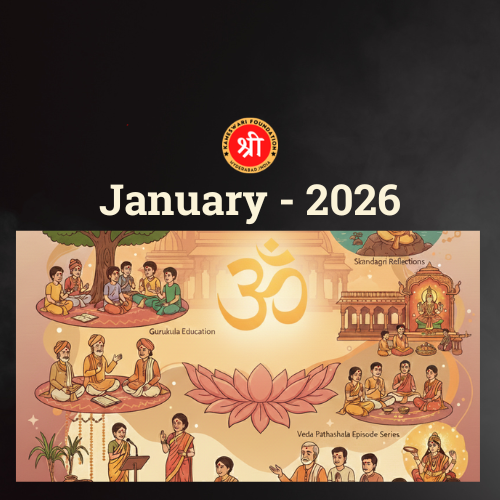
Monthly Highlights – January 26
- Posted by Sri Kameswari Foundation
- Date February 4, 2026
- Comments 0 comment
Greetings Everyone!!!
What is the true purpose of education?
The true purpose of any form of education is the realisation of one’s own Self.Fortunate indeed are those associated with Bharatiya Knowledge Systems, where self-realisation forms the very core of every branch of learning. In contrast,Western education does not impart this understanding directly; it largely depends on individuals to consciously remain rooted in such an ideology of education.
When the realisation of one’s true nature and working towards it is the ultimate goal of the soul, institutions that walk the dhārmic path must also hold the same vision. Their purpose lies in constantly remembering the true intent of their work—moving closer to the ultimate reality—rather than merely assuming that they are guiding the world to that destination.
The work we undertake is meant more for our own elevation towards higher realities than for remaining in a trance of perceiving ourselves as saviours of the world. We should instead feel grateful for the opportunity to be instruments in the hands of the Supreme Self,serving mankind as a dhārmic entity—considering this opportunity as a hug bestowed by Sri Rama upon Hanuman on his return from Lanka.
Praying to Goddess Kameswari that this thought remains in the background of our hearts in every endeavour, we present our January newsletter, filled with many memorable events that helped us reflect deeply upon the nature and purpose of our work.
Highlights of JANUARY 2026
1.Talk by Dr.J.Suryanarayana garu at “Seva Sankranti—Sahitya Sadgoshti 2026” – 15-Jan-26
Dr.J.Suryanarayana garu was invited to share his thoughts and approach to a better life through service at the event “Seva Sankranti—Sahitya Sadgoshti 2026”.
Below is the English transcript of the talk reflecting on Sevā Saṅkrānti as an inner transition—through service, guidance, and conscious growth.
What does Saṅkrānti actually mean?
“Sam” is a prefix meaning proper or well,and krānti comes from the verbal root kram,which means movement or progression. In essence,Saṅkrānti means proper,balanced movement – movement in the right direction.
When we observe the festival of Saṅkrānti,we understand that the cosmos is divided into twelve zodiacal signs.The Sun’s precise movement from one zodiac sign to another is what we call Saṅkrānti.This is an astronomical phenomenon,but similar transitions occur in human life as well.
A human being is also a conscious entity,and proper movement in life means growth.
For a newborn,the mother is the entire world and the child’s awareness is limited to the body—every need met through her care.Gradually,the child moves beyond and begins to acquire abilities—moving,speaking etc.
This is a transition from bodily awareness to śakti—capability.
From identifying only with the body,the child now integrates abilities and relationships and moves further into society and culture like “This is my home, my friend,my school.”
This too is a saṅkramaṇa—a transition.
When this stabilizes,another transition follows: the development of buddhi—intellect.We call this strategic thinking: thinking deeply about actions and their future outcomes.
Emotional happiness comes from social interactions, like celebrating festivals with family and relatives.But intellectual joy is greater.
All of this is common to everyone.
But only those whose lives are touched by a Guru experience a further transition—Vijñāna(higher knowledge).
Vi means distinct or special;Jñāna means knowledge.This special knowledge flows only through the grace of Guru.
The joy arising from such knowledge is what we must move toward.That is what we seek through Sevā Saṅkrānti.
Now,what is the role of seva in this transition?
Without service,we remain limited beings—confined to “my clothes,my salary,my house etc”. Our world becomes very small.
A human being’s true expansion lies in realizing,“I am the entire universe”. This realization becomes possible only when a Guru enters one’s life.
Service is the clutch that enables us to shift gears in life.Just as a vehicle cannot change gears without a clutch,we cannot move toward higher knowledge without service.
Service helps us realize that we are not isolated beings,but part of a vast, conscious cosmos.
True growth is not merely external progress,it is inward — understanding one’s true nature.
Service alone enables this inner shift. Today’s urban children live in artificial realities.But service alone prepares them to face real struggles and relate to the cosmos with wisdom.
Service itself is a form of worship(upāsanā).Doing something continuously, despite difficulty,with the intention that it benefits others— that is service.
If we instill this understanding in children,only then they can truly elevate themselves.
The original talk,delivered in Telugu, is presented below.
2.Dr. J. Suryanarayana Garu Speaks on Gurukula Education at an event sponsored by Raksha International Foundation – 16-Jan-26
These days,we hear the word “Gurukula” far more often than we did a few decades ago. Undoubtedly,there has been a significant rise in the establishment of Gurukulas across India that impart education in Indian Knowledge Systems such as the Vedas,Shastras,Puranas and more.
This may create an impression that Gurukulas are meant solely for teaching Indic Knowledge Systems,while Paathashalas—often equated with schools—are confined to Western education. However, the distinction between the two goes much deeper.This nuanced difference was beautifully articulated by our Acharya,Dr.Jammalamadaka Suryanarayana garu,in an event sponsored by Raksha International Foundation.
In his address to Gurukula students and members,Dr.J.Suryanarayana garu spoke on:
1.The lessons we must learn from our ancestors in the context of the Gurukula tradition.
2.How Gurukulas should be envisioned and built to address contemporary needs, rather than merely replicating the models of the past.
This lecture will greatly benefit students, parents and Gurukula institutions by helping them understand the needs of the present time and the immense opportunity before us to re-establish ourselves as Viswaguru.
We thank Raksha International Foundation for inviting us to share our vision for a thriving Gurukula ecosystem.
3.Sri Prasanna Anjaneya Swamy Temple(Korutadiparru – Bapatla District – Andhra Pradesh) – 5th Anniversary Celebrations – 20-Jan-26
With the blessings of the Divine Mother and in the presence of elders, the fifth anniversary celebrations of Sri Prasanna Anjaneya Swamy at Korutadiparru in Bapatla district were conducted in a grand and splendid manner. ✨ ✨ ✨
While Vedic scholars chanted the Manyu Suktam, the Rama Shadakshari Mantra, and Hanumad Mantras, a special homam was performed.
The Sahasranamarchana puja to Sri Anjaneya Swamy was a delightful and divine spectacle.
Devotees from the surrounding villages also arrived and participated in the programme with great enthusiasm, adding further grace and splendour to the celebrations.
After receiving the sacred teertham and prasadam, the devotees returned to their respective homes filled with supreme joy.
Our heartfelt thanks to everyone who participated in the festivities and contributed to the successful conduct of the celebration.🙏 🙏 🙏
Here are a few glimpses from the event 🙏
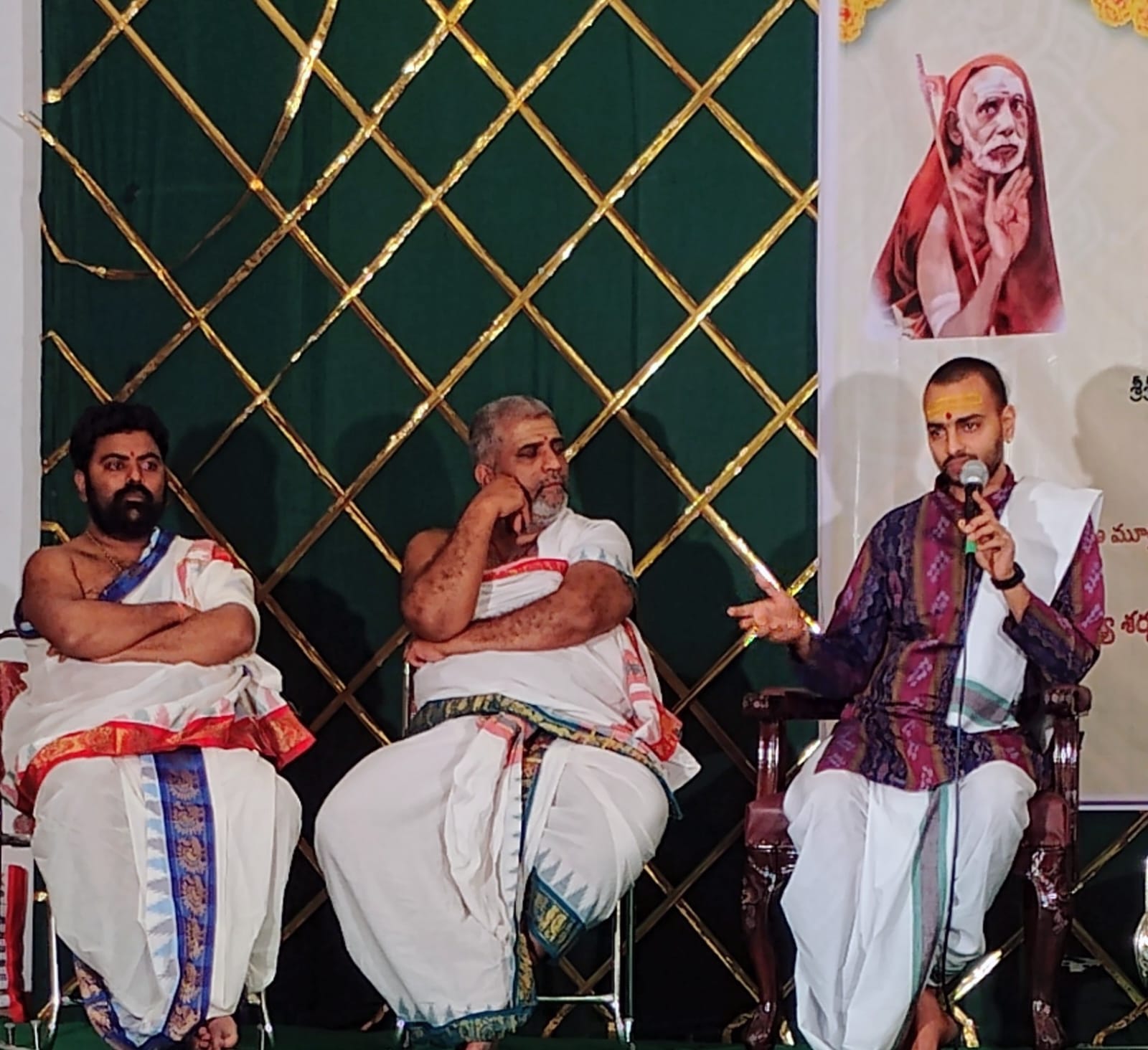
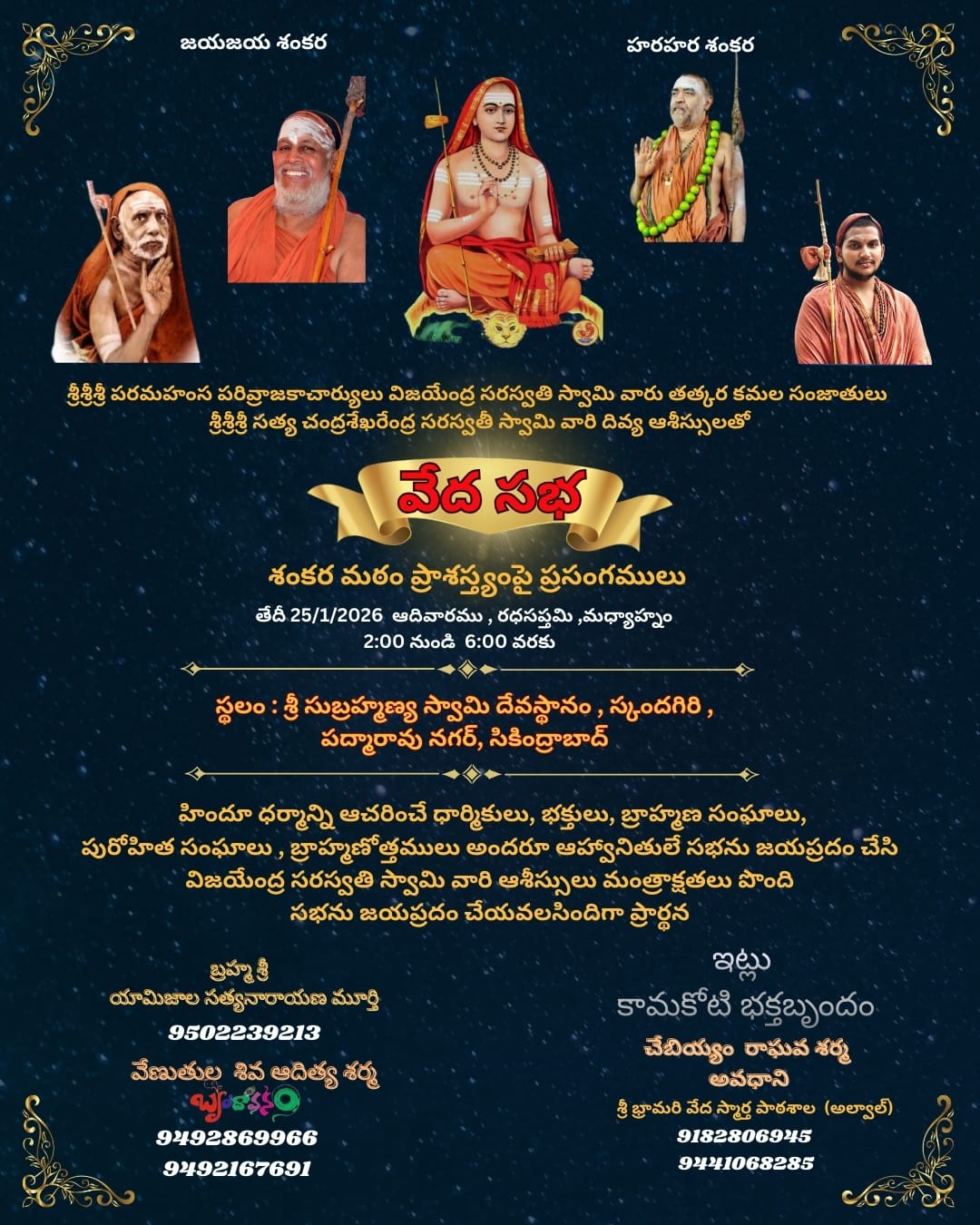
4.A Thoughtful Evening at Skandagiri – Reflections on Living Institutions of Dharma By Dr.J.Suryanarayana garu – 25-01-26
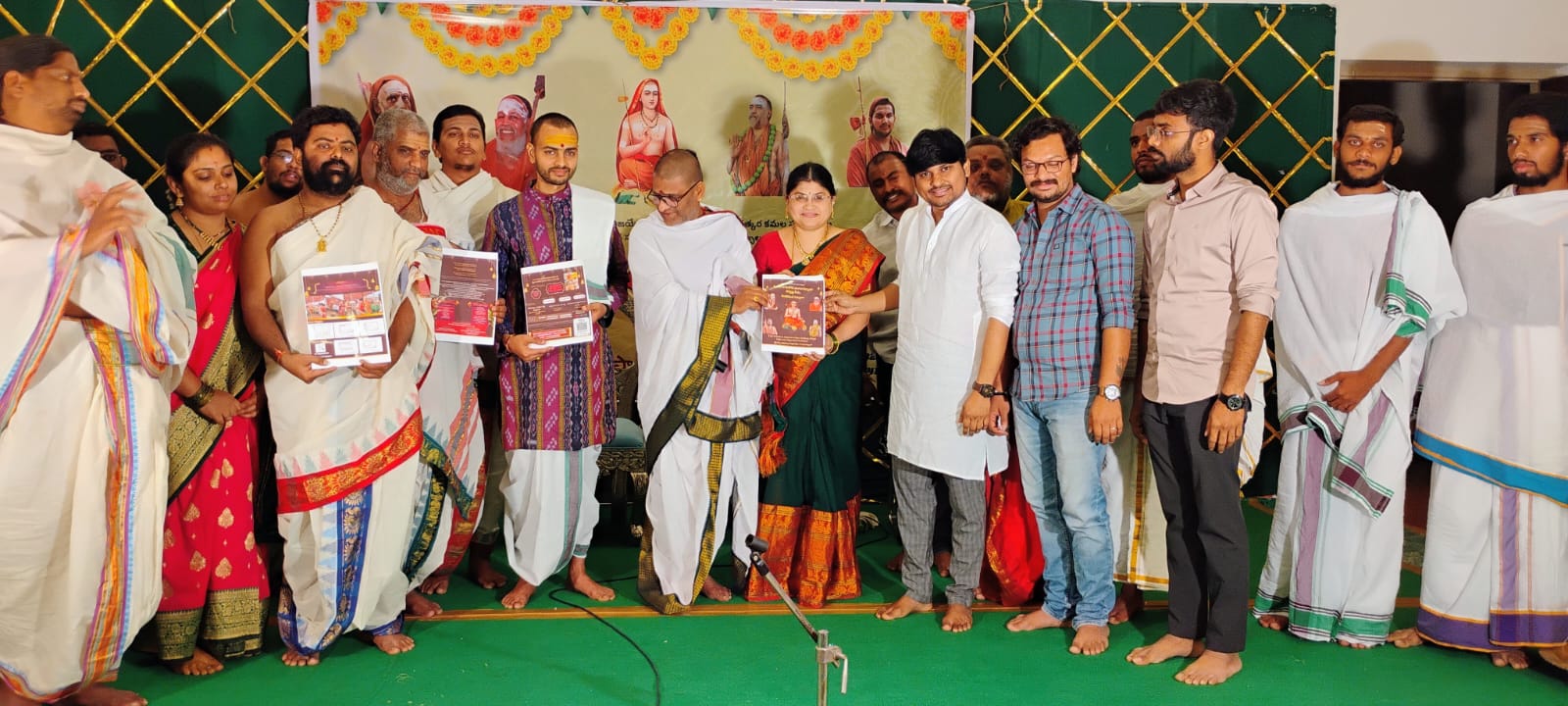
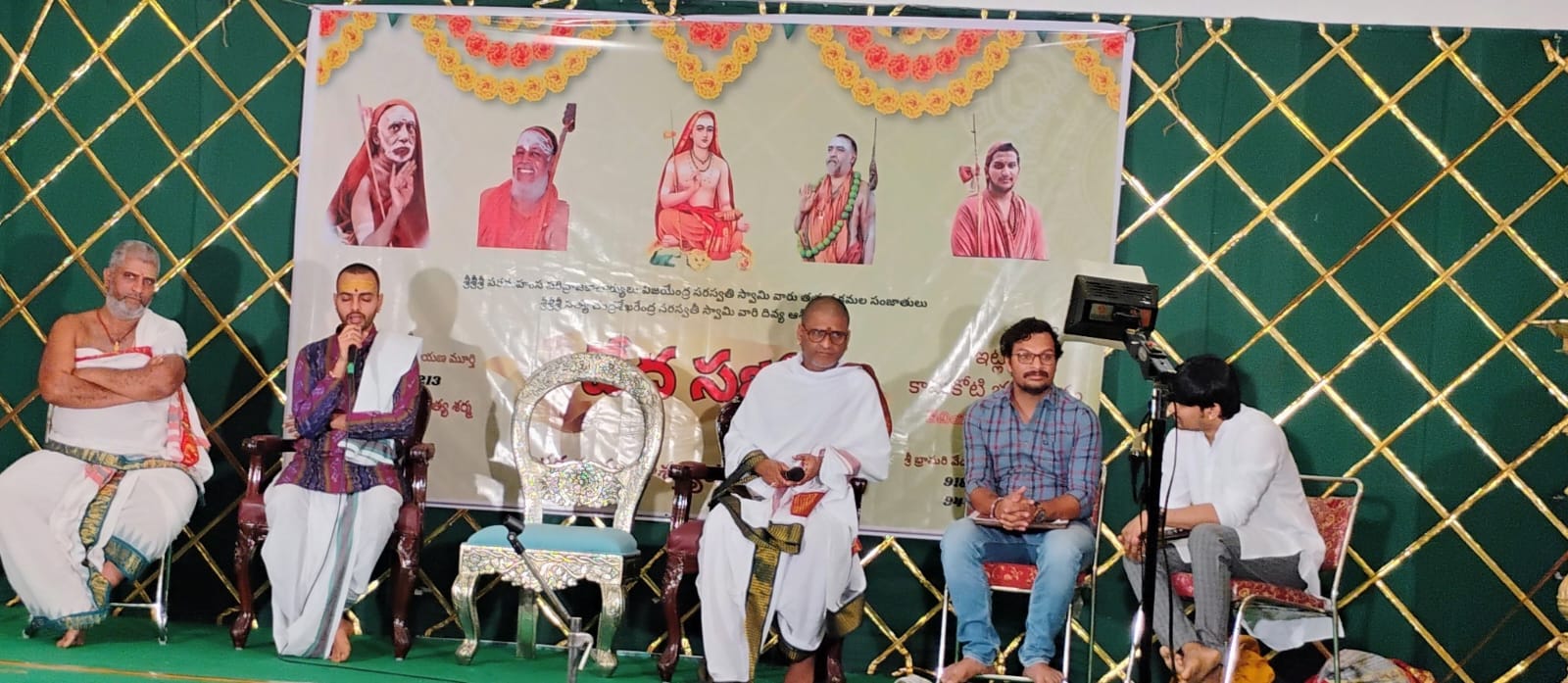
On the auspicious eve of Rathasaptami(25th Jan),Dr.J.Suryanarayana garu had the opportunity to be part of a meaningful gathering at Skandagiri,Hyderabad, thanks to the warm invitation of Sri Chebiyam Raghava Sharma and his dedicated team.
The occasion was the formal intimation and propagation of the commencement of construction of a Kanchi Kamakoti Shankara Mutt at Chityala,Nalgonda District. The setting itself was elevating—rooted in devotion, collective intent, and a quiet confidence about the future.
The evening began with a beautifully conducted Veda Sabha, where the reverberation of Vedic chanting created an atmosphere of continuity—something timeless unfolding in the present moment. Following this,Dr.J.Suryanarayana garu was requested to address the gathering.
Civilizations Rise, Institutions Fade — Except One
In his address,he chose to step back and look at history through a civilizational lens. He briefly spoke about some of the great civilizations the world has witnessed—the Egyptian, Mayan, Greek, Roman, and several other ancient cultures across regions. These civilizations achieved remarkable heights in knowledge, architecture, governance, and philosophy. Yet today, most of them exist only in history books and archaeological remains. Their institutions, belief systems, and living traditions are no longer actively practiced.
He then reflected on our own land—Bharat—which too has seen countless dynasties rise and fall. Kings, empires, and political structures have changed repeatedly. Yet, amidst all this flux, one kind of institution has continued uninterruptedly, adapting, responding, and guiding society across centuries.
That institution is the Shankara Mutt tradition.
Why the Shankara Mutts Endure
He shared with the audience that the enduring strength of the Shankara Mutts,established by Jagadguru Adi Shankaracharya,lies in their very foundation. These institutions were not created to rule, nor were they established for power or wealth. Their purpose was deeper and more universal—to preserve, transmit, and live the eternal principles of Advaita Vedanta.
Because their grounding is in universal truths, not temporal authority, they have withstood both physical invasions and philosophical onslaughts. Unlike many cultures where invaders could easily dismantle existing thought systems and replace them with new ones, Bharat’s civilizational core remained resilient. Institutions like the Shankara Mutts acted as silent anchors—holding society together through knowledge, discipline, and lived dharma.
A Welcome Vision for Telangana
In this context, the vision to establish Shankara Mutt branches across districts of Telangana, beginning with Chityala in Nalgonda District, is deeply heartening. It reflects not nostalgia for the past, but confidence in dharma as a living, relevant force for the present and future.
Such institutions do not merely preserve tradition—they educate, guide, and stabilise society, especially in times of rapid change. Dr.J.Suryanarayana garu also expressed that he personally sees this initiative as a constructive and much-needed step, rooted in wisdom and oriented towards long-term societal well-being.
We congratulate Sri Chebiyam Raghava Sharma and the entire team for their clarity of vision and commitment, and we feel honoured to share our thoughts on such a significant occasion.
May this effort grow steadily and serve as a source of guidance, learning, and inner strength for generations to come.
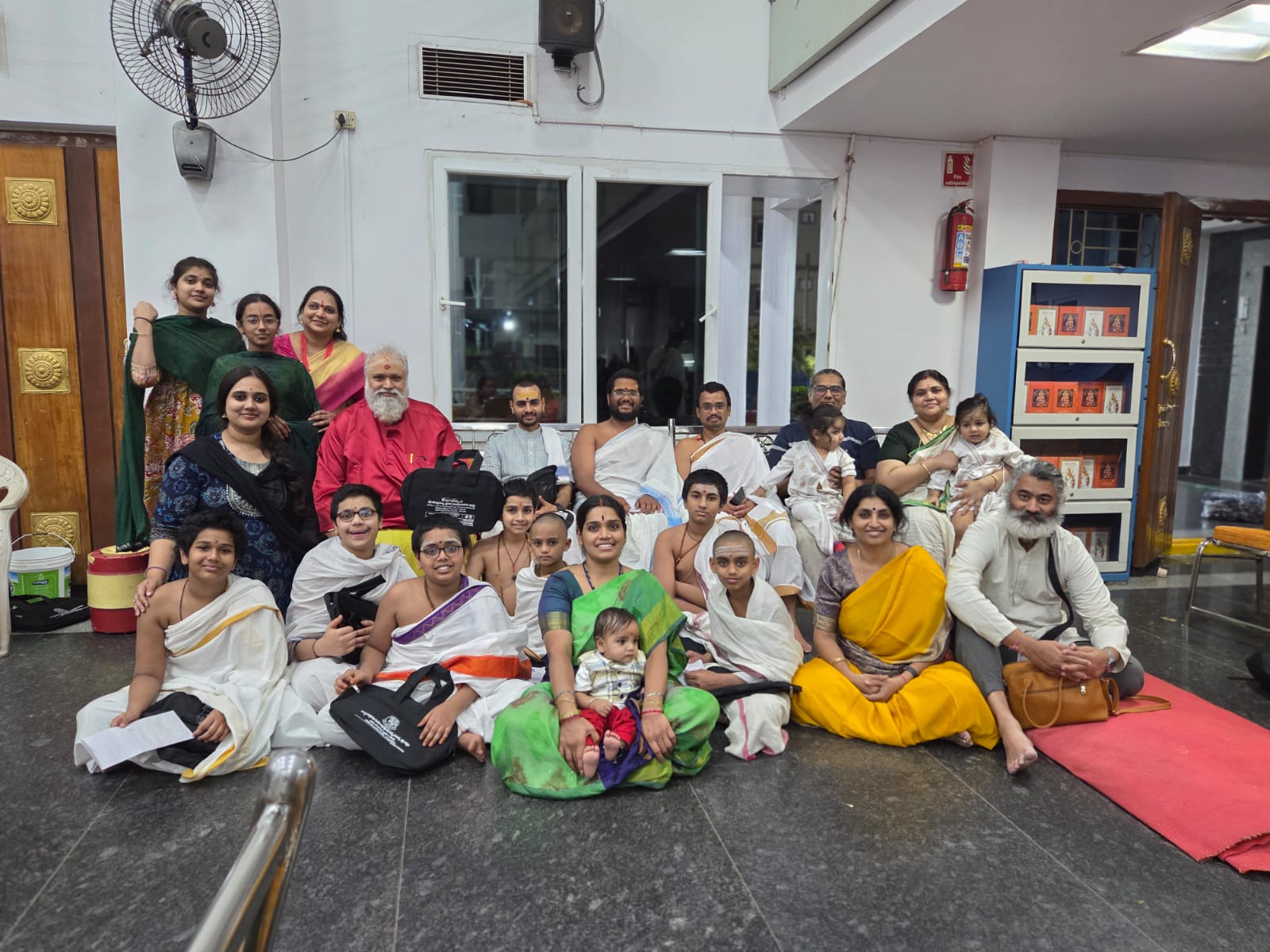
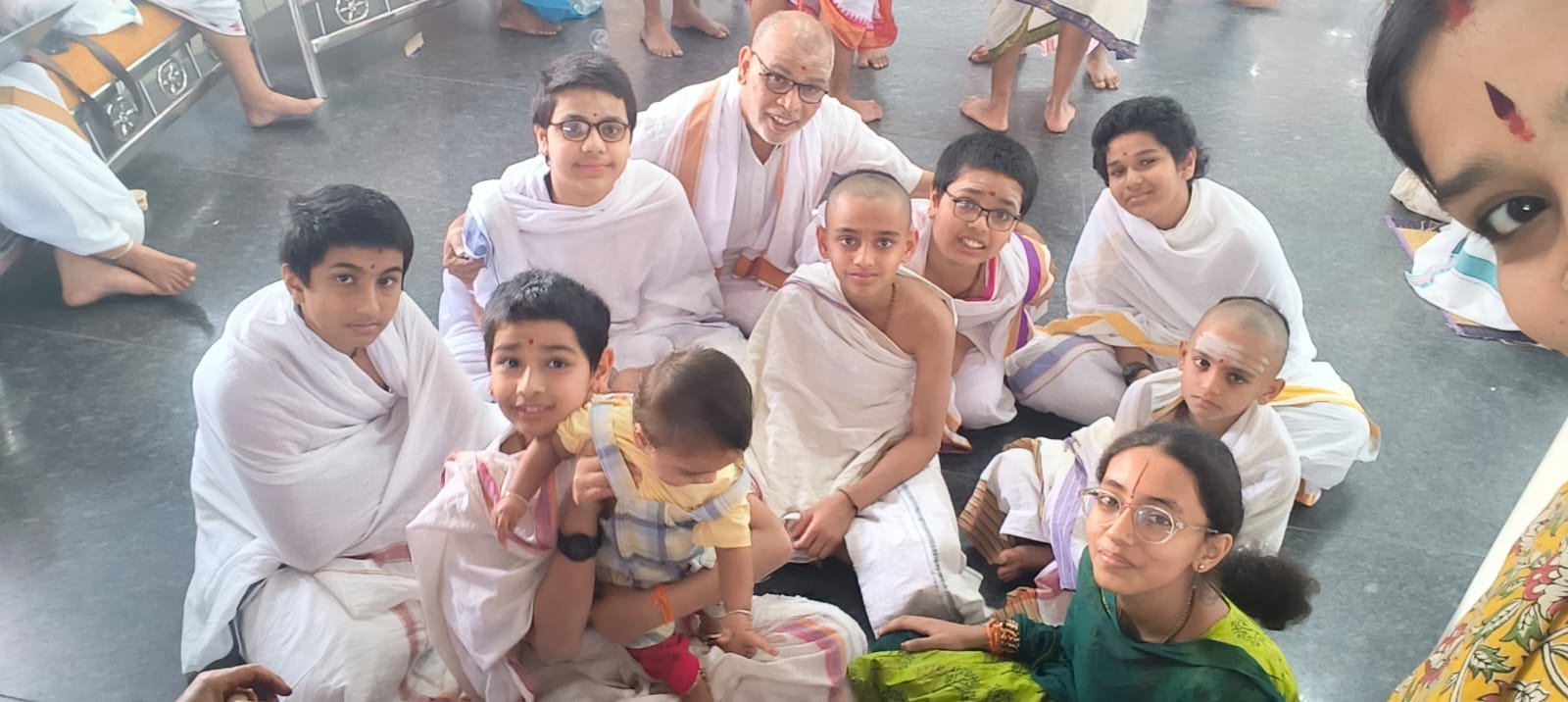
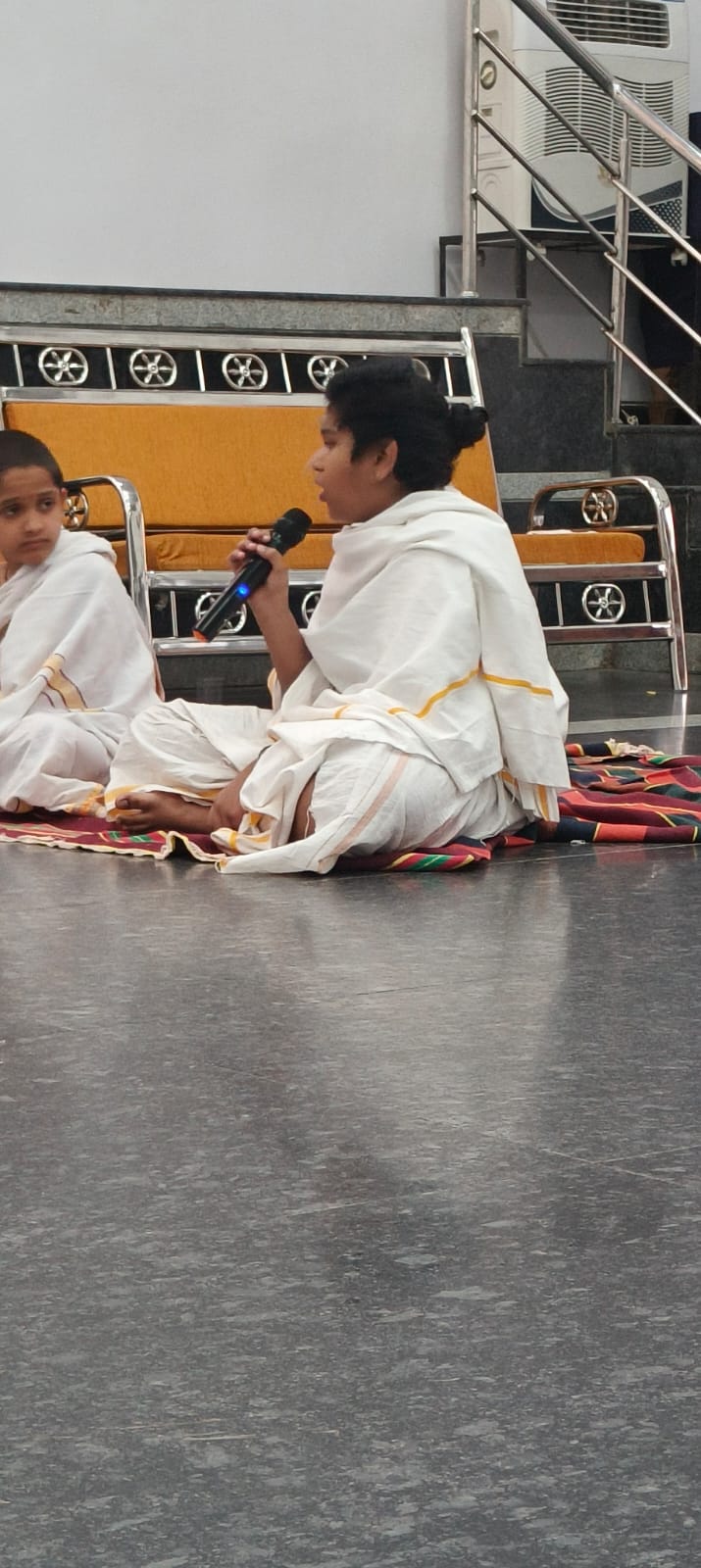
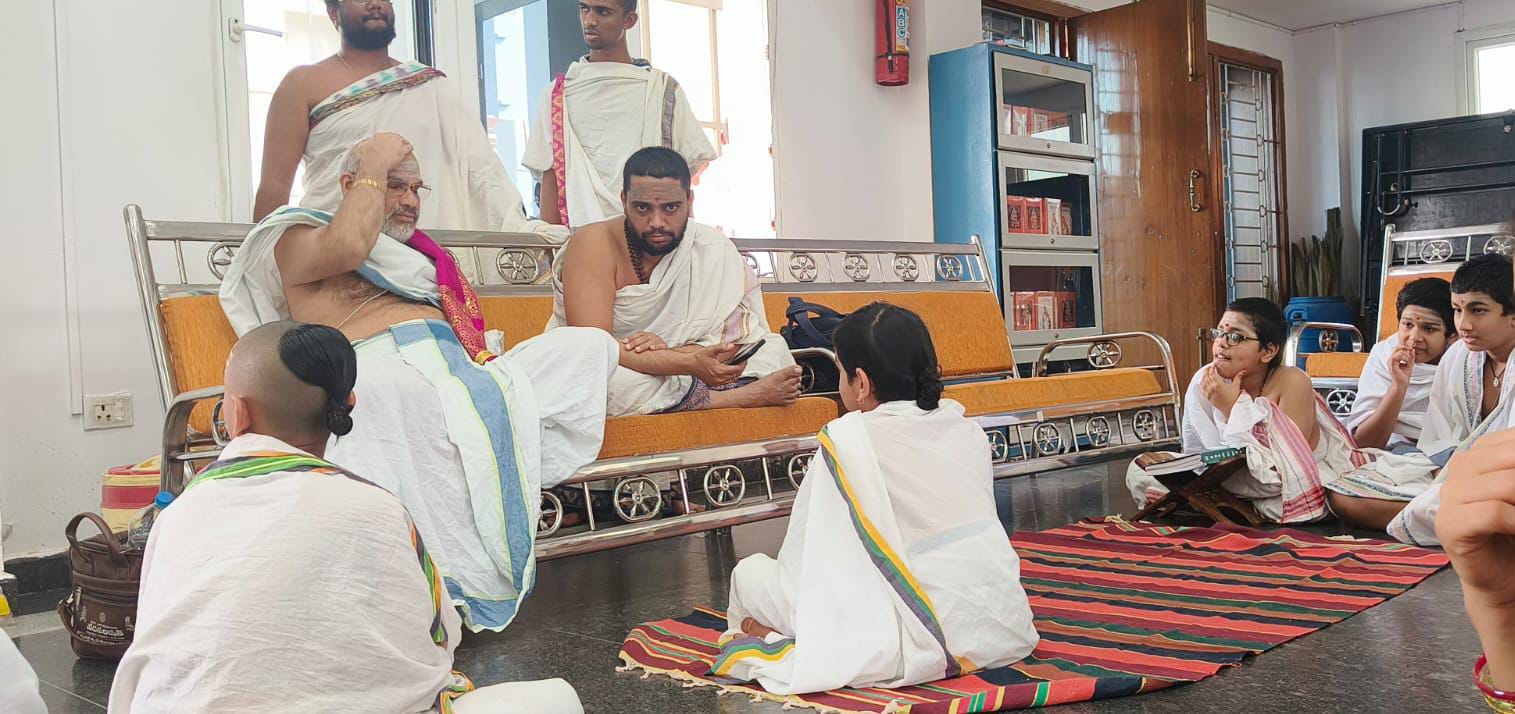
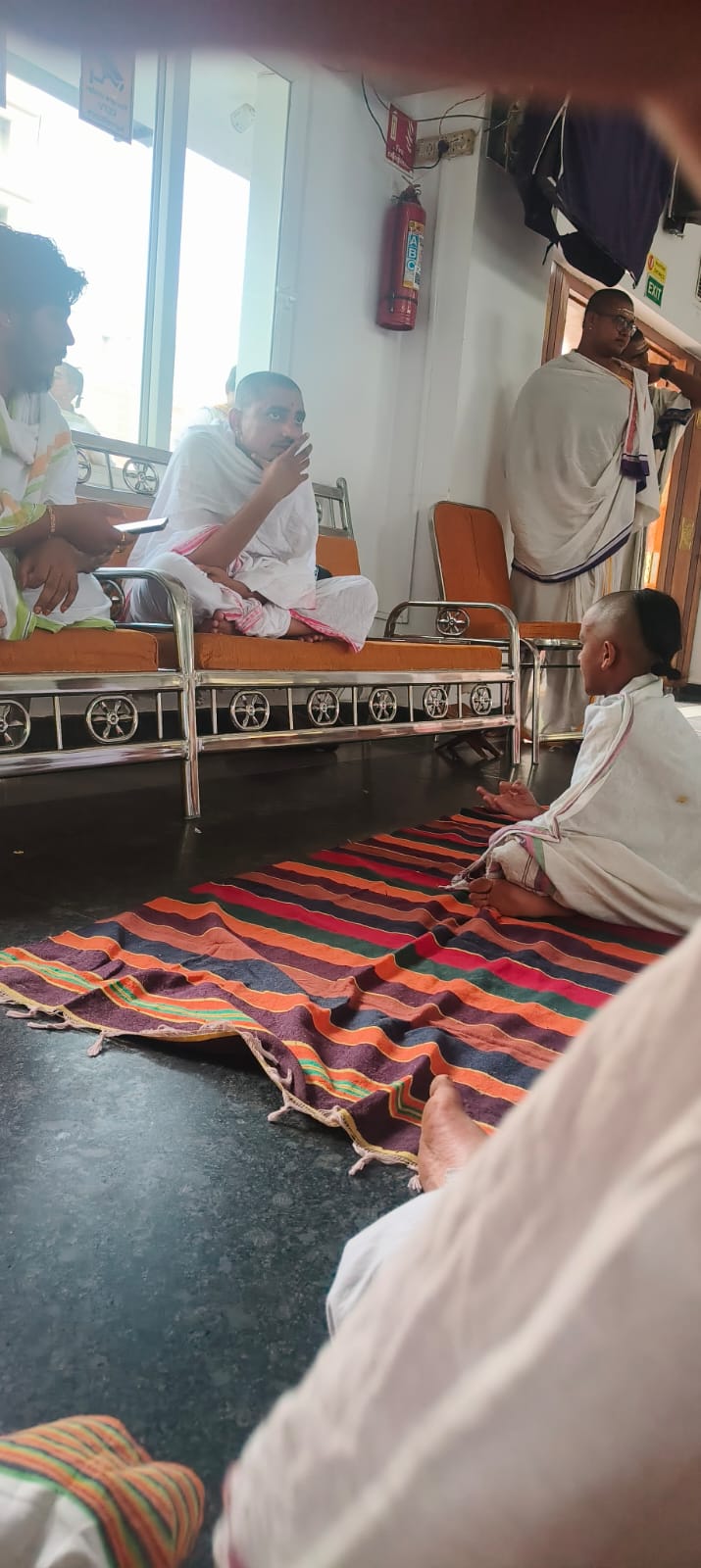
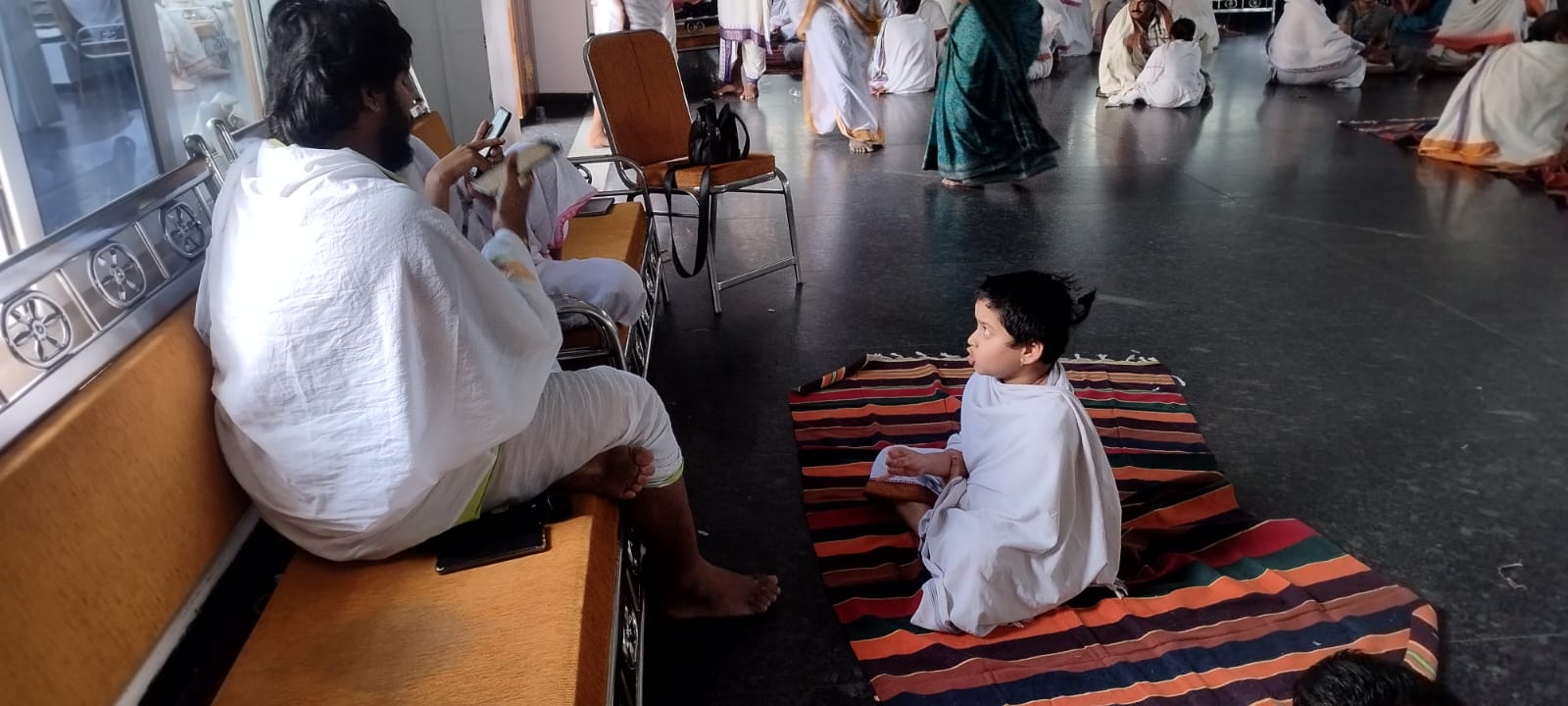
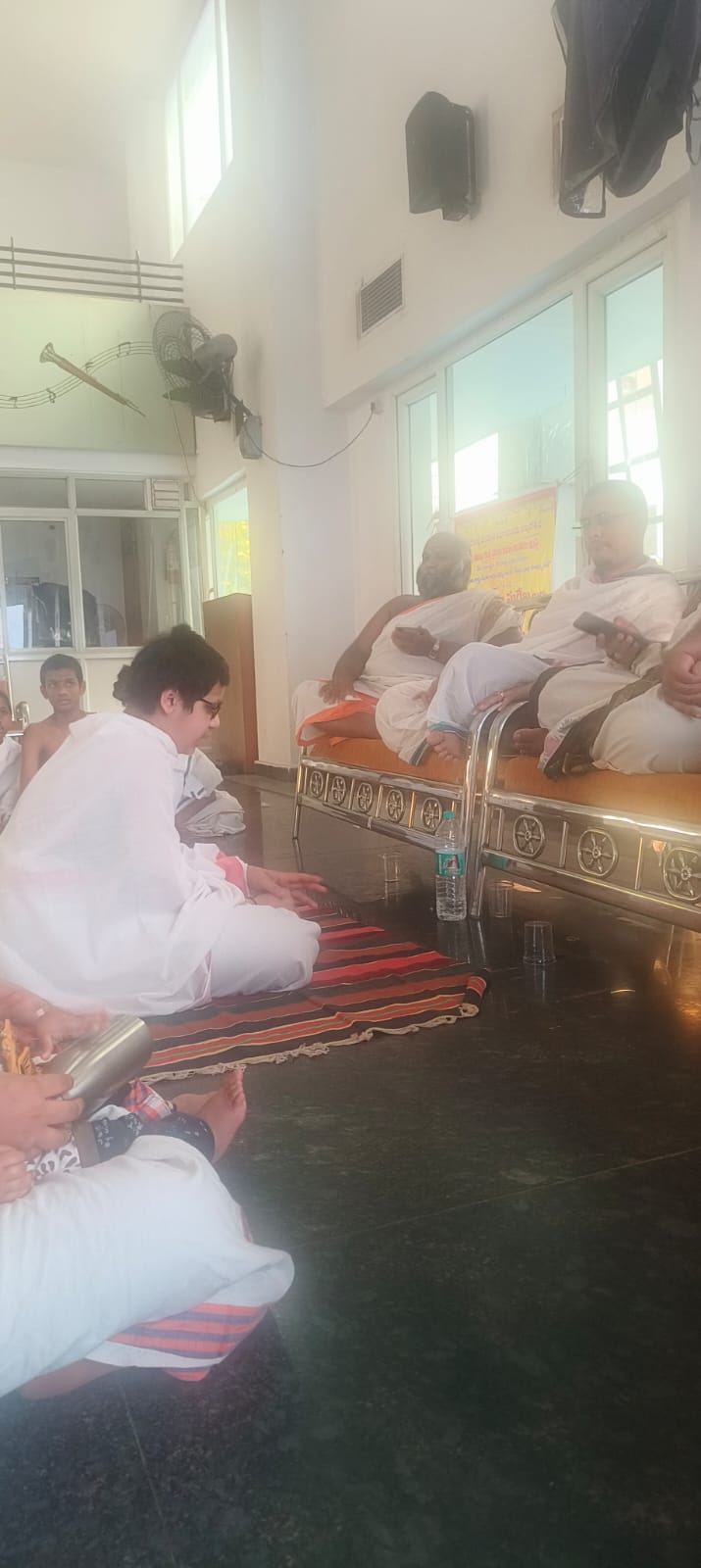
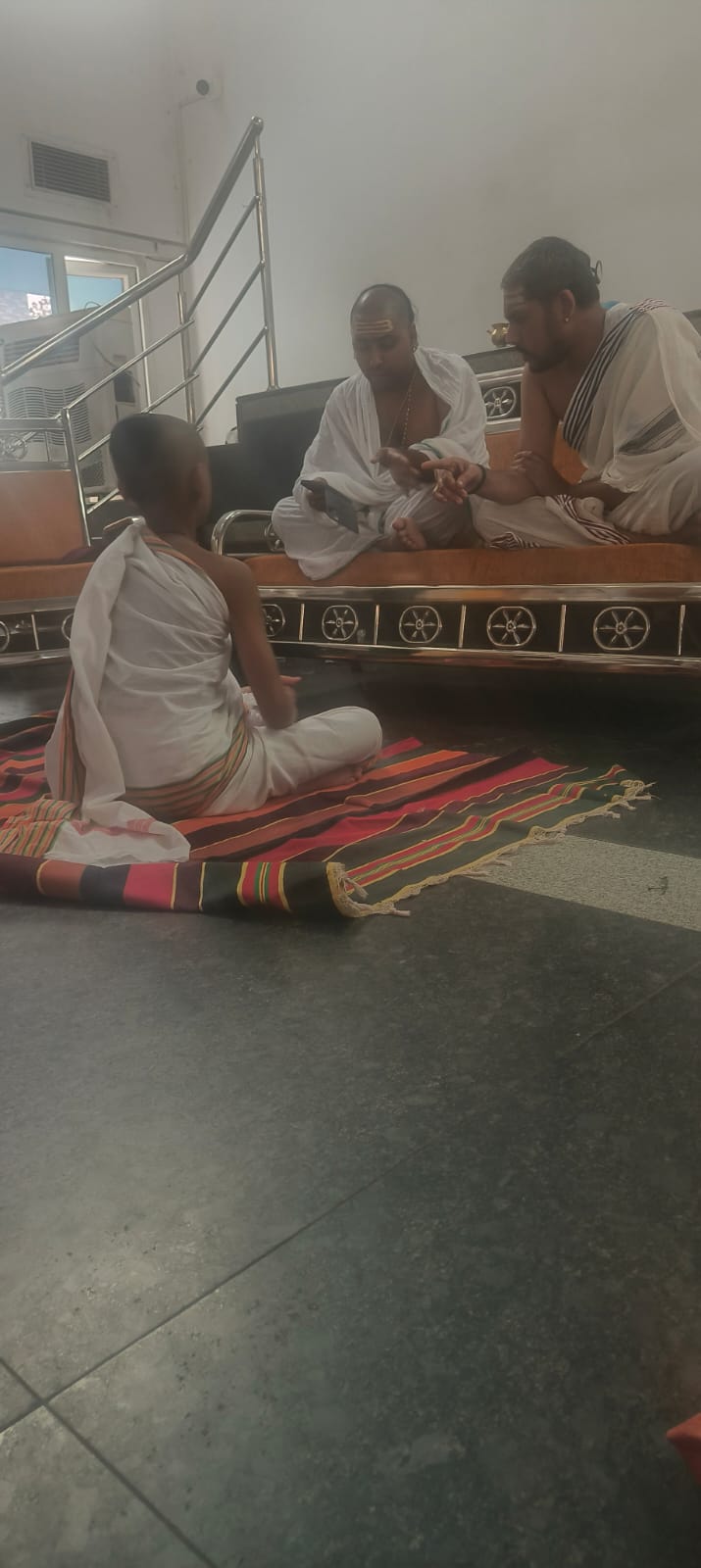
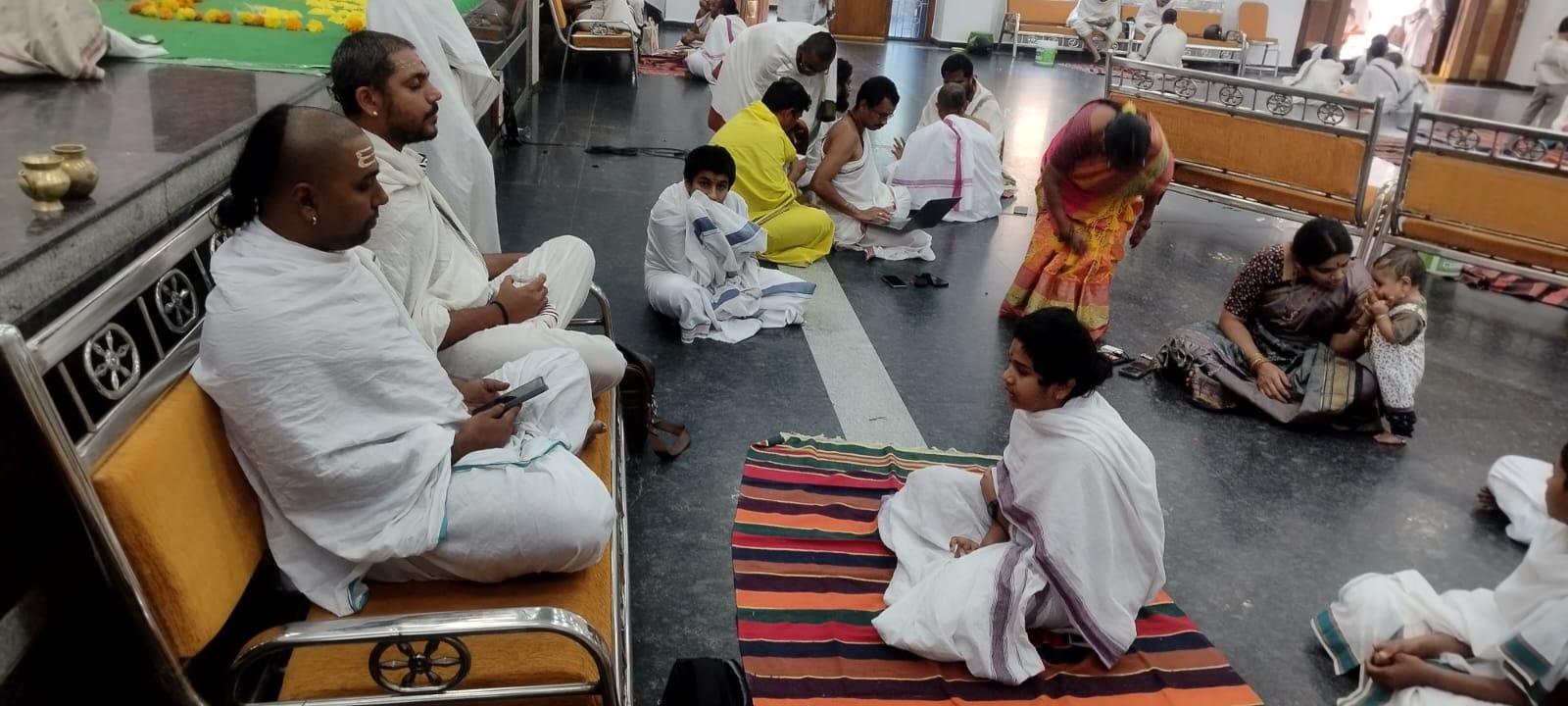
5.Sri Kameswari Veda Pathashala students successfully completed Vedic examinations conducted by Sri Vidyaranya Vaidika Vidya Viharam trust – 30-Jan-26
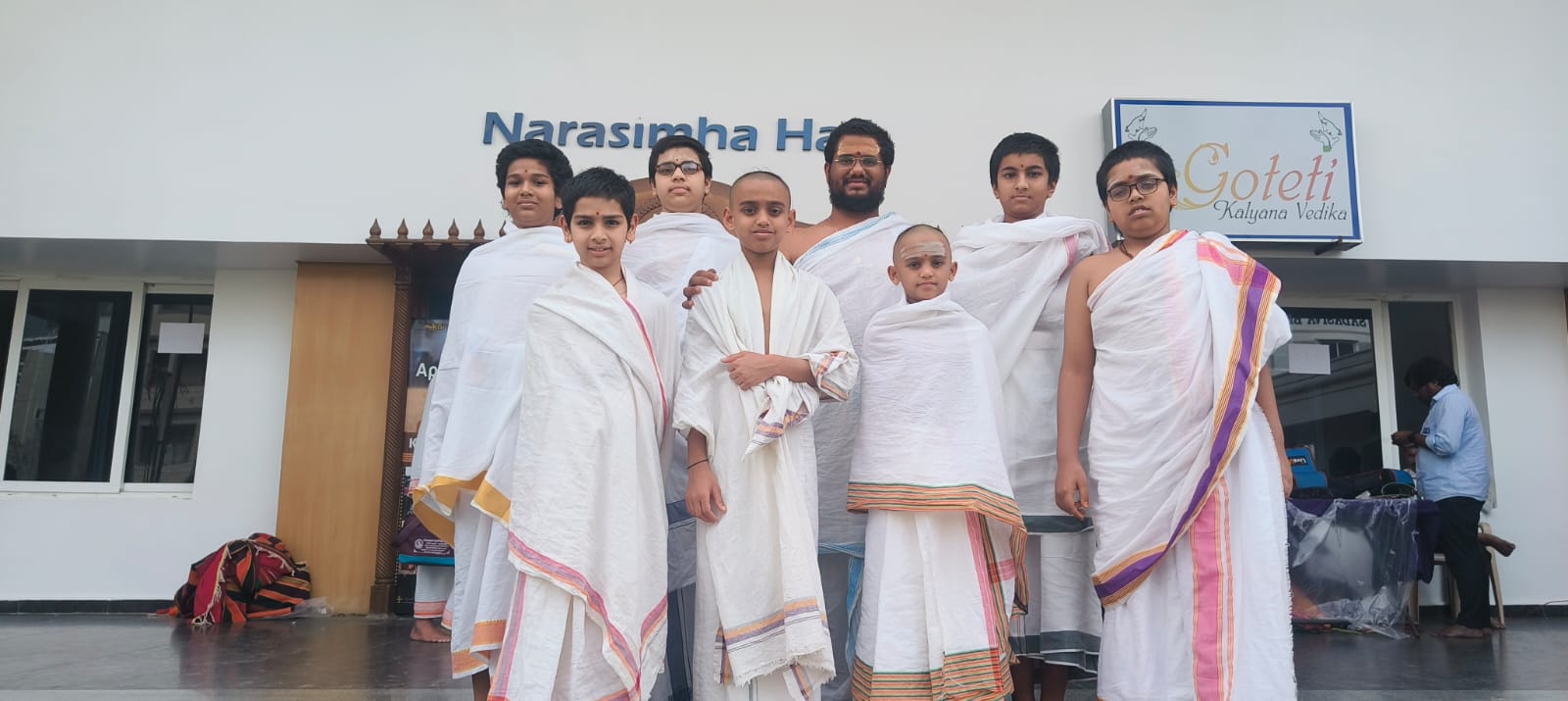
With the divine blessings of Sri Sringeri Sarada Peetham,Sri Vidyaranya Vaidika Vidya Viharam trust has conducted Vedic examinations for 4days(Jan 29 – Feb 1) at Goteti Kalyana Vedika,L.B Nagar,Hyderabad.
The examinations drew enthusiastic participation from over 350 students representing various regions of South India. In addition to the Vedic evaluations, assessments in Sanskrit literature were also conducted, thereby expanding the academic breadth of the programme.
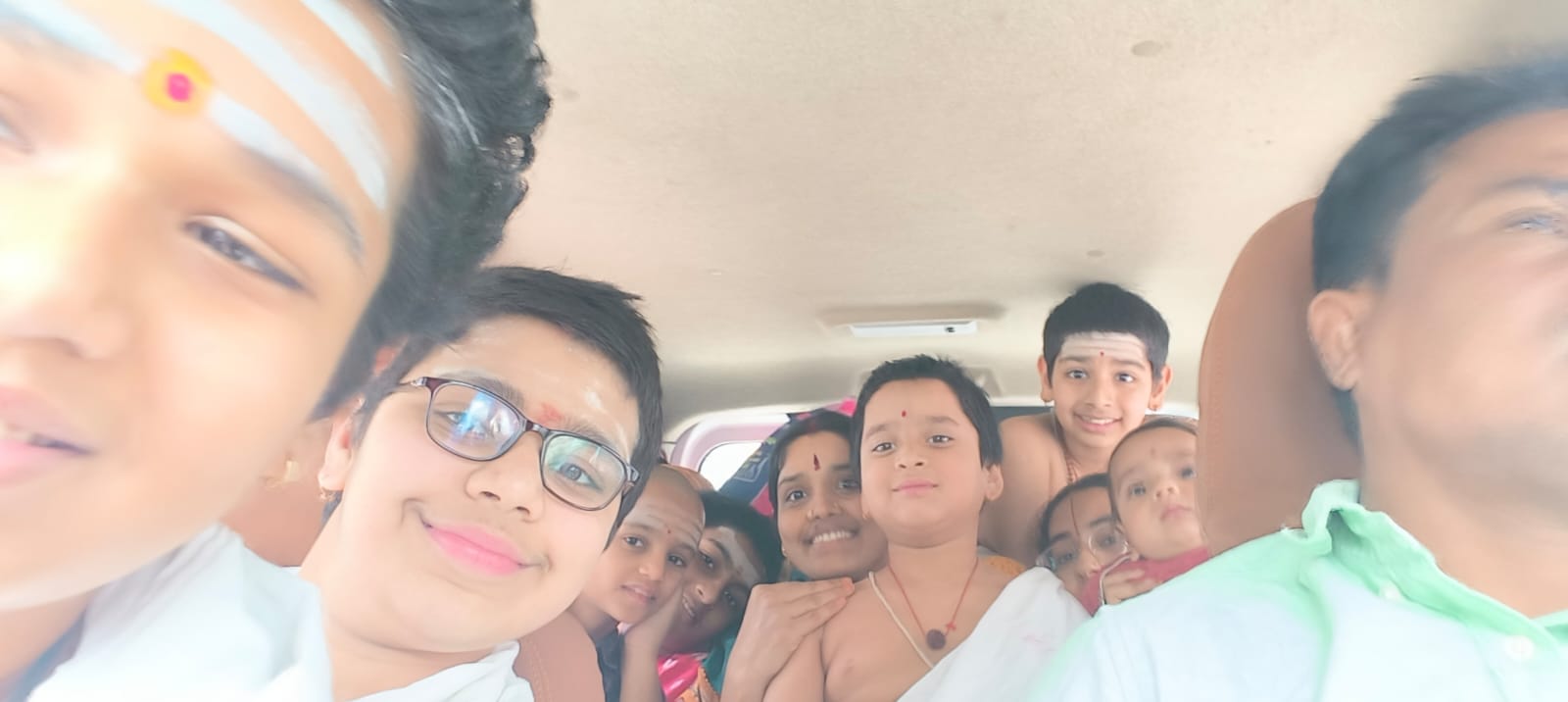
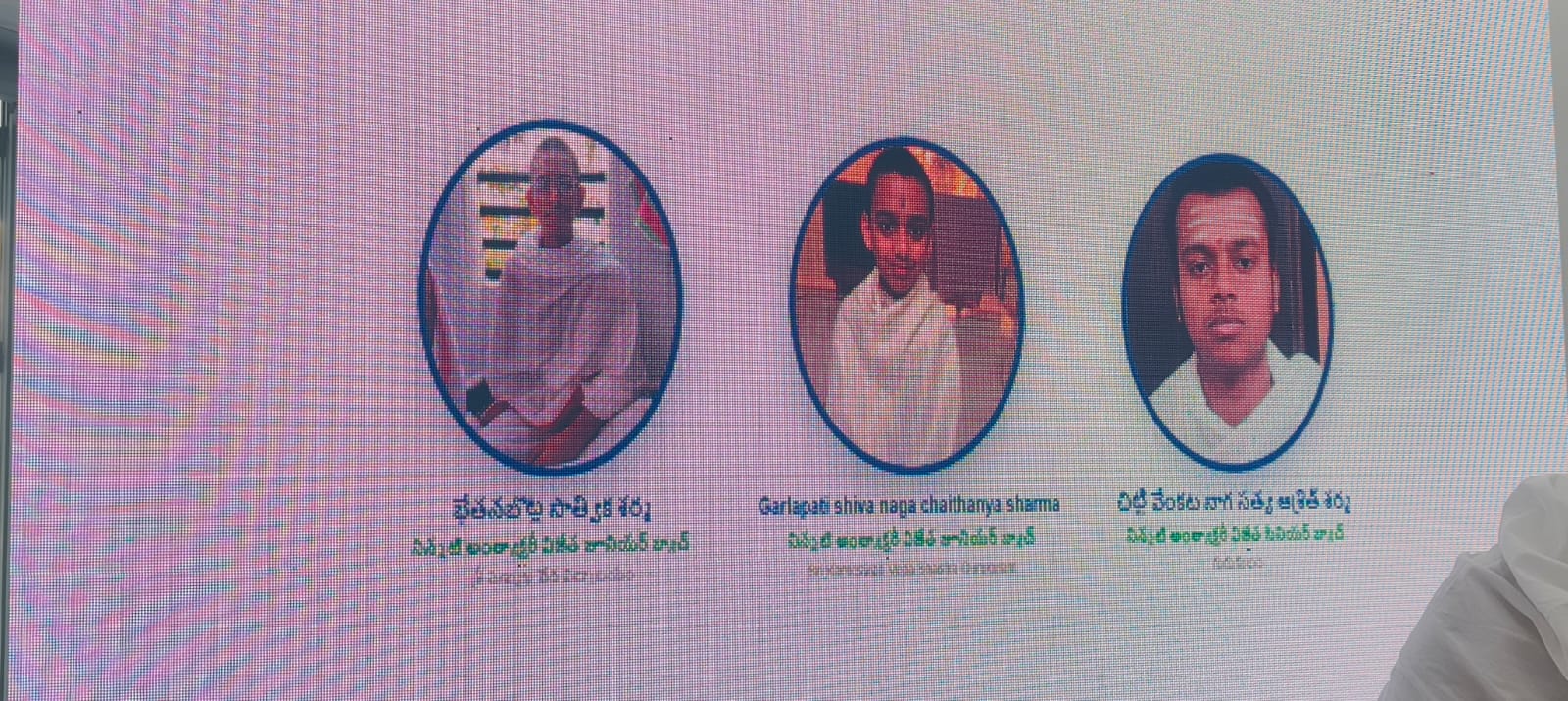
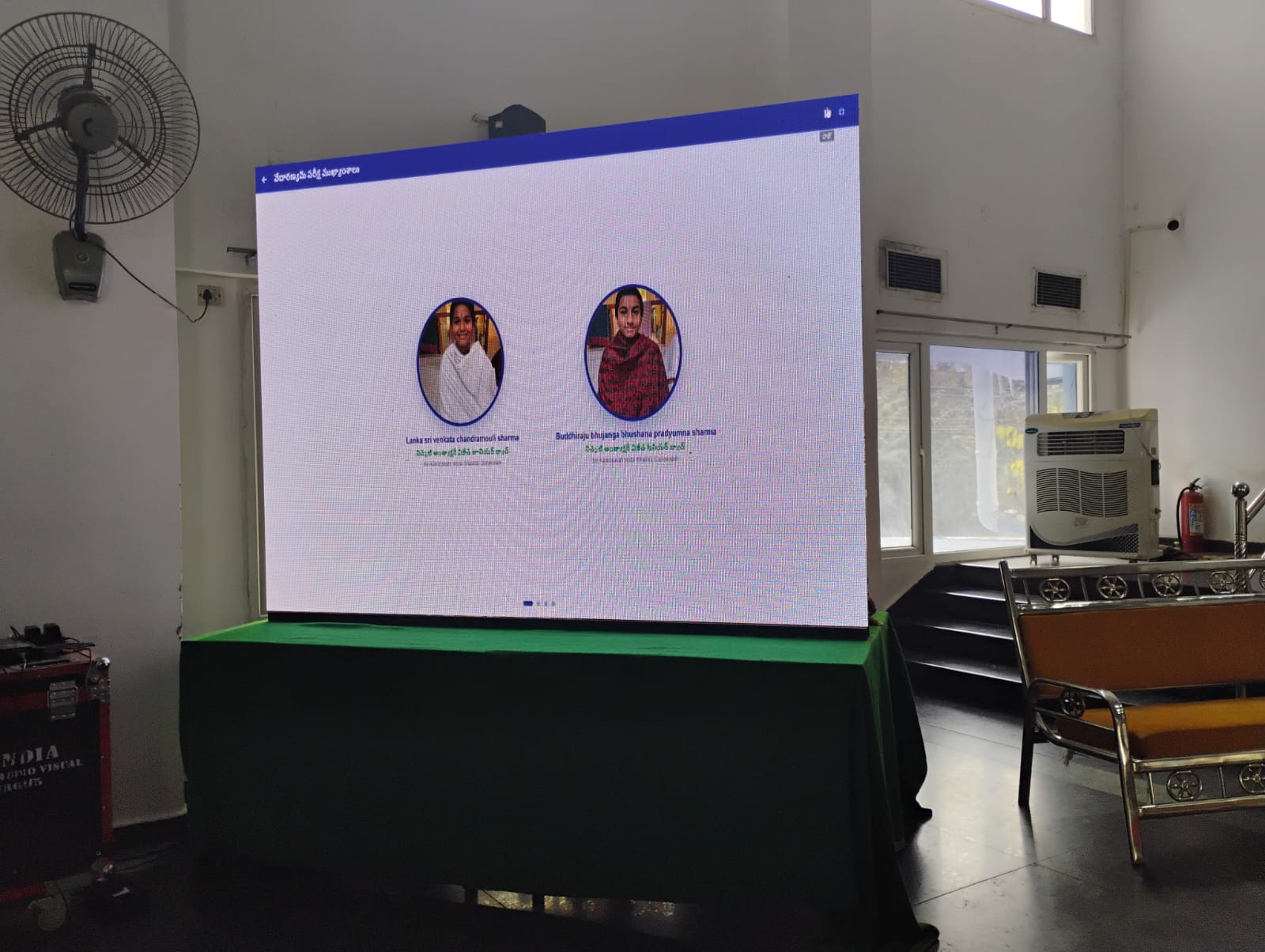
For Sri Kameswari Foundation, the event was particularly noteworthy due to the outstanding performance of eight of our students—Jammalamadaka Srirameswara Sastry, Jammalamadaka Balakrishna Murthy, Shishtla Skandan, Lanka Chandramouli, Buddhiraju Pradyumna, Garlapati Shiva Chaitanya, Garlapati Shivaguru and Chilukuri Skanda. All of them cleared the examination with distinction.
The Parīkṣādhikāris (Examiners) highly appreciated their accuracy in swara (intonation), promptness in recitation,and composed self-assurance.
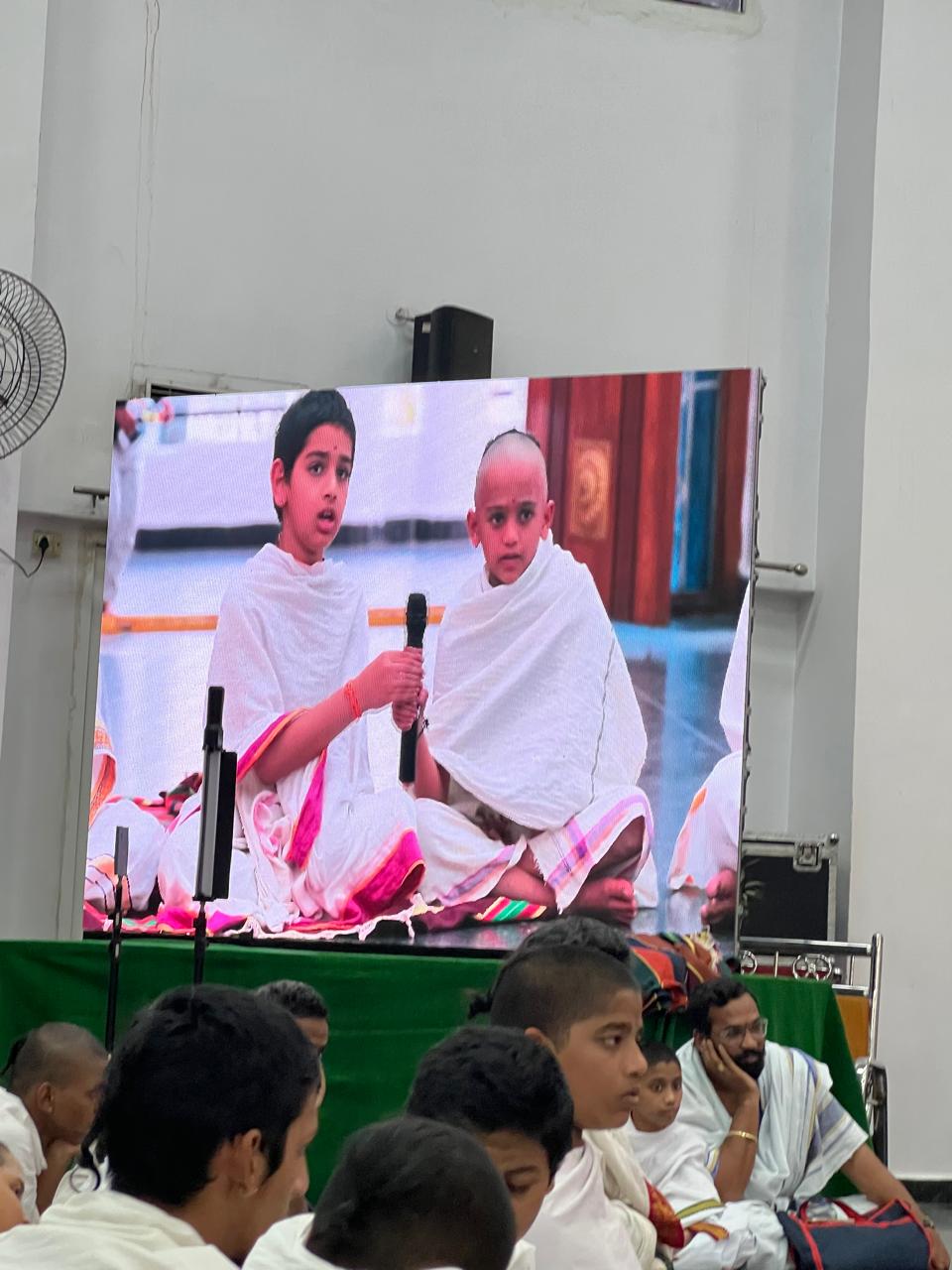
A distinctive feature of the examination was the inclusion of Antyākṣarī on Veda Panasas,in which our students demonstrated exceptional proficiency. Antyākṣarī was conducted each day, and on the final day, the winners and runners-up from the previous three days participated.
3 students from our Veda Pāṭhaśālā—Lanka Chandramouli, Buddhiraju Pradyumna and Garlapati Shiva Chaitanya — reached the finals. Among them,Chi.Garlapati Shiva Chaitanya secured the runner-up position.
Our vidyarthis thoroughly enjoyed participating in the Antyākṣarī,while competing confidently alongside other participants and receiving special recognition for their performance.
The Parīkṣādhikāris also expressed their admiration for the distinctive instructional approach followed in our Gurukula. This carefully designed teaching method not only deepens learning but also builds confidence, helping students progress through various stages without unnecessary pressure. Such a balanced and thoughtful approach significantly contributed to the commendable outcomes achieved by our students, reaffirming the strength of our educational philosophy.
We sincerely thank our Vedam Guruvugaru,Kunapuli Ganesh Karthikeya Ghanapathi garu for his dedicated and tradition-oriented training of our Veda vidyārthis.His guidance has not only strengthened their learning of the Vedas but has also enabled them to present them with confidence and in the proper manner.
We also extend our heartfelt thanks to Dr.Jammalamadaka Suryanarayana garu and Pravallika garu for their unwavering commitment to the welfare of the Veda vidyārthis at the Pāṭhaśālā,even in the face of difficult situations and challenging circumstances.
Our special thanks to Gunturu Revanth Ghanapathi garu for conducting monthly Veda parīkṣās and for training the students to achieve accurate intonation.
Overall,the Veda Parīkṣā served as a powerful affirmation of the commitment and sincere dedication of the students, teachers, and organizers, further strengthening the tradition of Vedic learning while nurturing a culture of academic excellence.
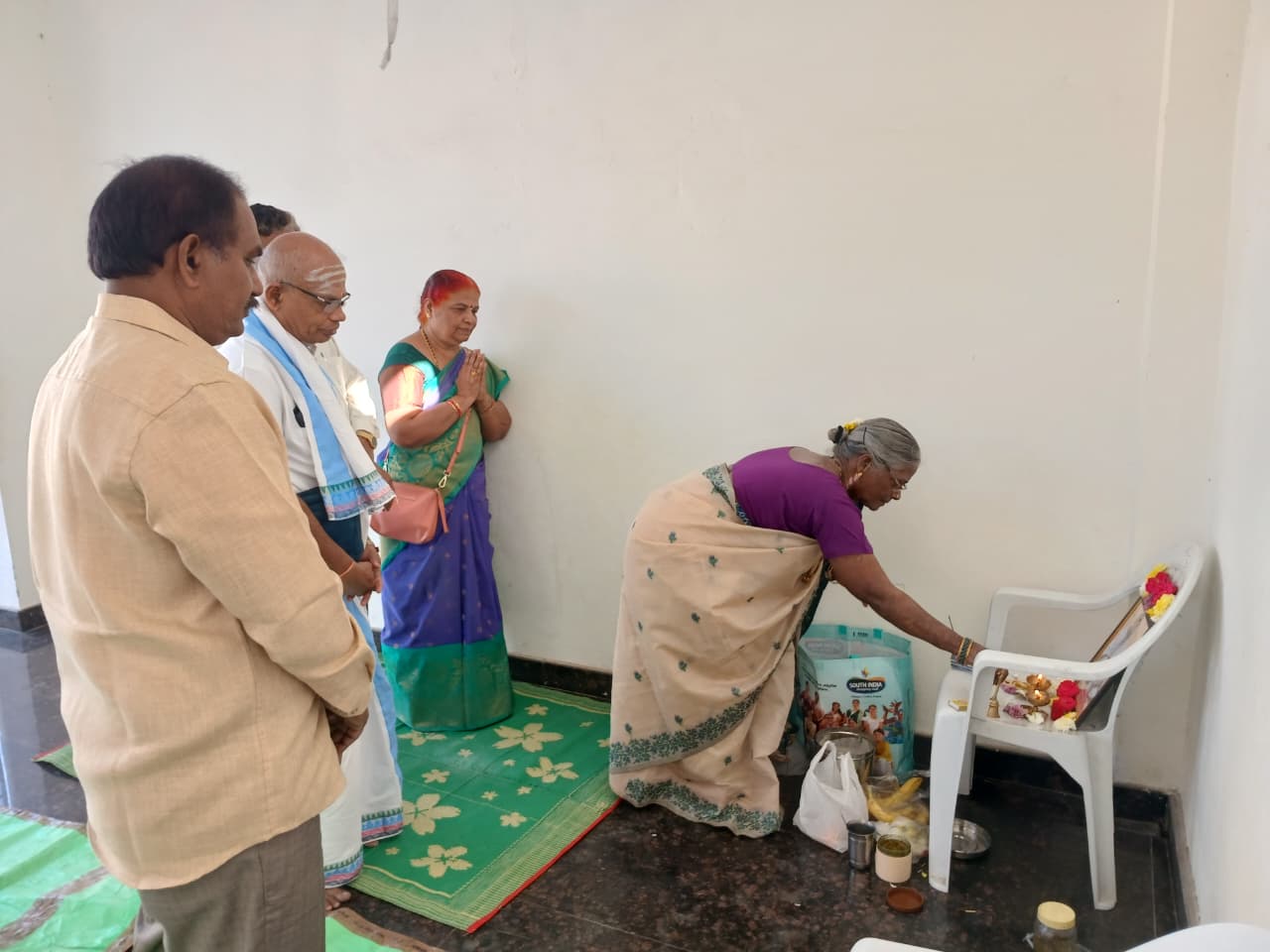
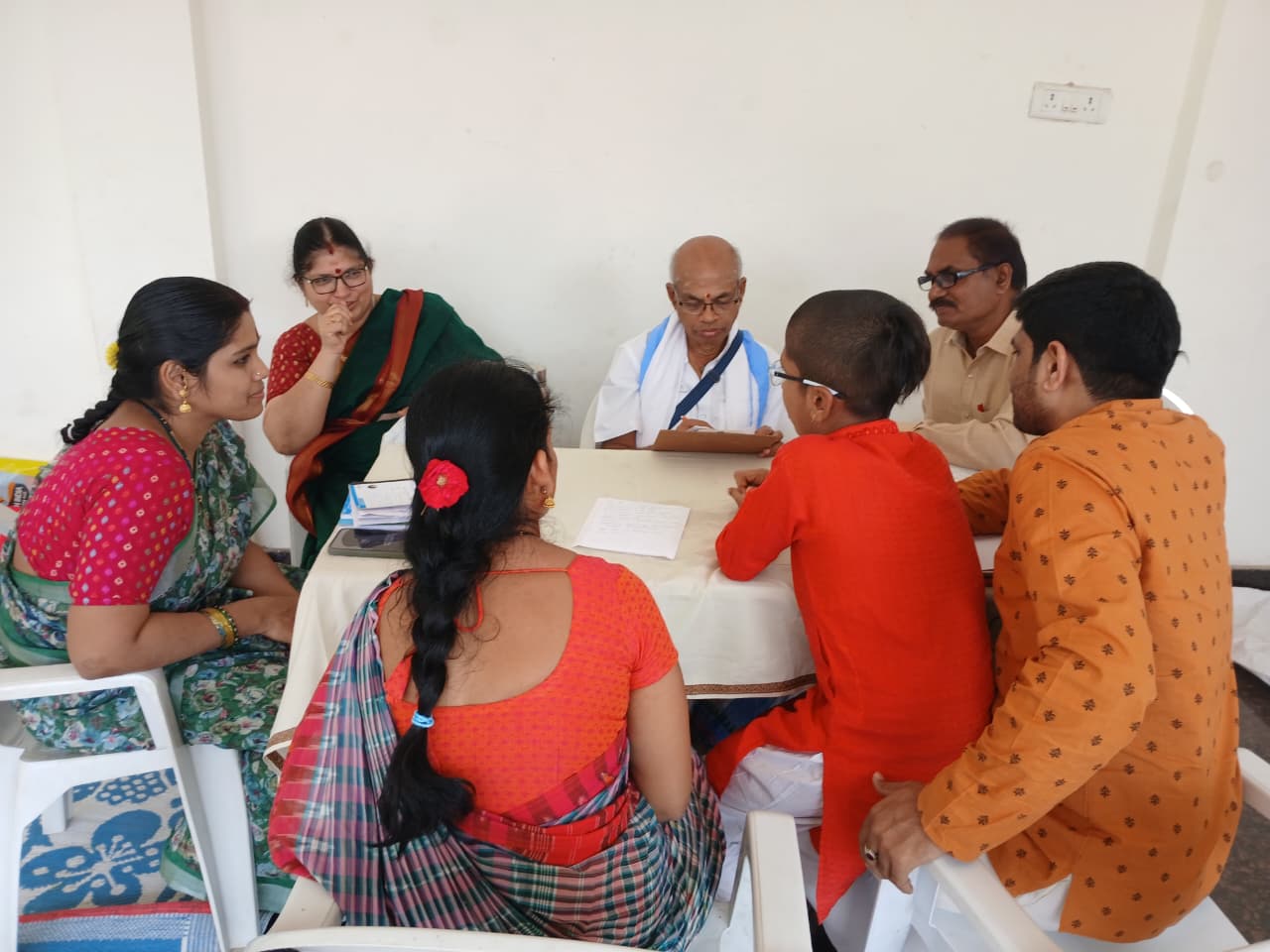
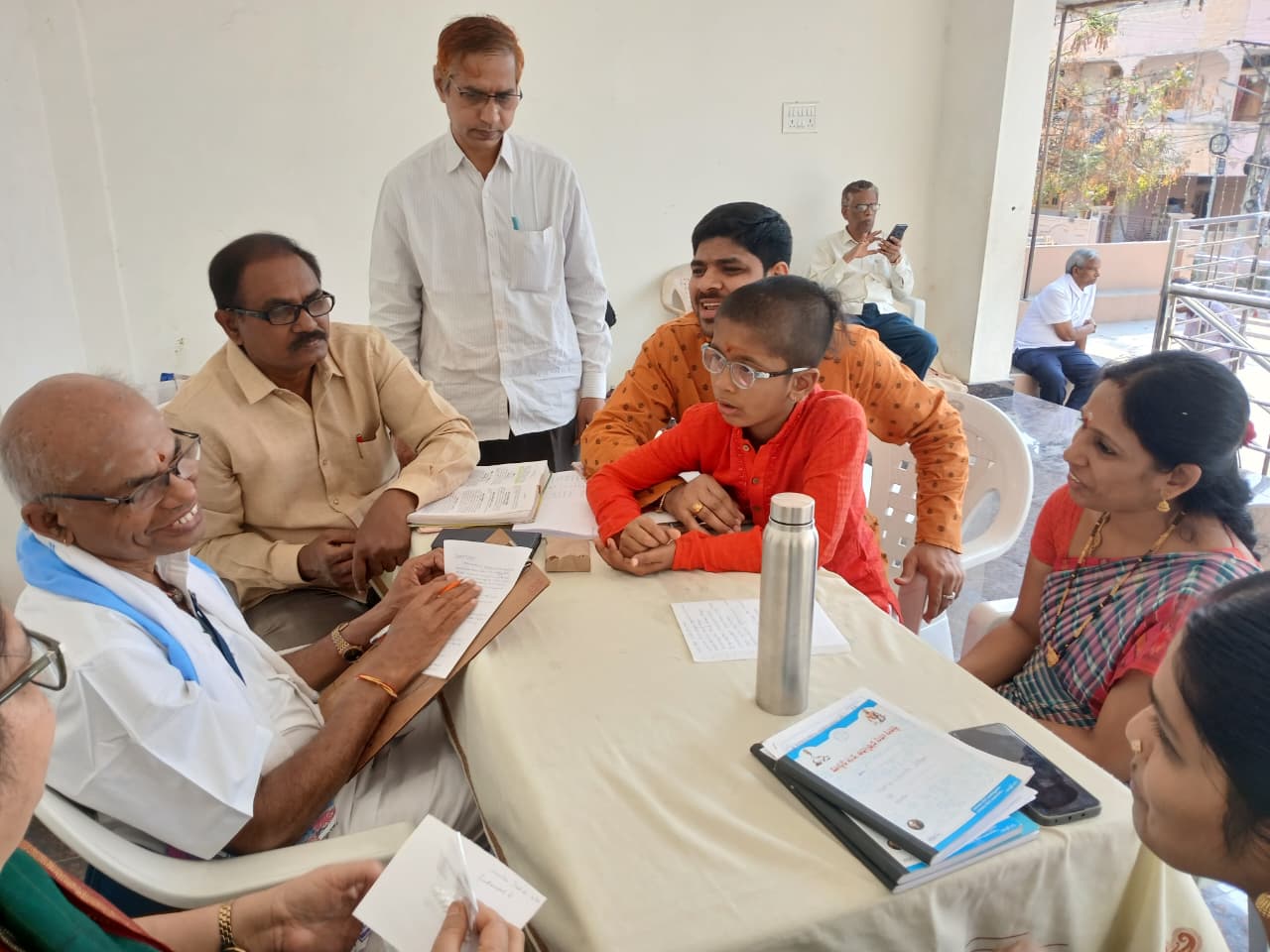
6.EK Spiritual Services – Medical Camp -19-01-2025
Dr.Gopal Rao Garu and his dedicated team successfully organized a comprehensive and impactful homeopathy medical camp at the Abhayanjaneya Swamy Temple in RTC Colony.
This thoughtful initiative extended its benefits to students, parents,and members of the surrounding community,providing care and relief to many enduring chronic health conditions.
It was a deeply meaningful healthcare effort, and the foundation felt truly honored to host such a holistic,community-centered program.
7.Sri BalaTripuraSundari Devi Charitra — A Devotional Telugu Episode Series!
śaraṇāgata-dīnārta-paritrāṇa-parāyaṇe |
sarvasyārti-hare devi nārāyaṇi namo’sTu te ||
Jagadamba Lalitā Devi always protects those who come to her with distress and surrender.The sacred story of how she appeared and saved the world was given by Brahmasri Tadepalli Raghava Narayana Sastry garu (Chandolu Sastry garu) through his book Sri BalaTripuraSundari Devi Charitra.
Sri Kameswari Foundation is presenting this divine story in a simple and clear manner for our telugu audience.
We have released the second episode in this series,which you can watch below.
8.Śrīmadbhagavadgītā Tattvamu – Discourse series by Dr.J.Suryanarayana garu
We have released the next episode in this discourse series, drawing upon the timeless wisdom of Bhagavan Sri Krishna, which illuminates the journey from the cycle of birth toward that which lies beyond it.
Through this Episode-9,we attempt to understand the true nature of soul through the topics – True Scholar,Analogy Of Clothes in Bhagavad Gita
True Scholar,Analogy Of Clothes – https://kameswari.org/true-scholaranalogy-of-clothes/
Ch-2 | Meaning of Shlokas 18 – 23: https://kameswari.org/ch-2meaning-of-shlokas-18-23/
The English translations of these episodes are available on our website through the Śrīmadbhagavadgītā Tattvamu page : https://kameswari.org/srimadbhagavadgita-tattvamu/
9.Tarkasangraha Tutorial Video Series By Chi.Kalaga Achyut Sarma
In traditional Gurukulas and the realm of Shastras, the study of Tarkashastra typically begins with Tarkasangraha, composed by Sri Annambhatta. This concise text, structured in about 300 short sentences, offers a gentle and accessible introduction to the subject.
Kanthasthikarana (committing to memory) of these sentences is highly beneficial — it not only deepens one’s grasp of Tarkashastra, but also enhances the study of other Shastras and cultivates a Tattvika Drishti (philosophical worldview).
With this intent,Sri Kameswari Foundation brings to you the Tarkasangraha Recitation Tutorial, recited by Chi. Kalaga Achyut Sarma. Each sentence is recited twice, enabling learners to repeat and practice effectively.
We have released the final videos in this series
10.Here are few other videos that we shared with knowledge seekers on various IKS related topics

You may also like
NOTIFICATION FOR SANSKRIT TEACHER REQUIREMENT
Monthly Highlights – February 26
