Meaning of Ślokas 1–3 In Arjuna Viṣāda Yoga,Arjuna stands as a representative of all of us,mirroring the doubts,fears, and emotional conflicts that arise in our lives. He enters the battlefield after years of preparation and penance,with a firm resolve to …
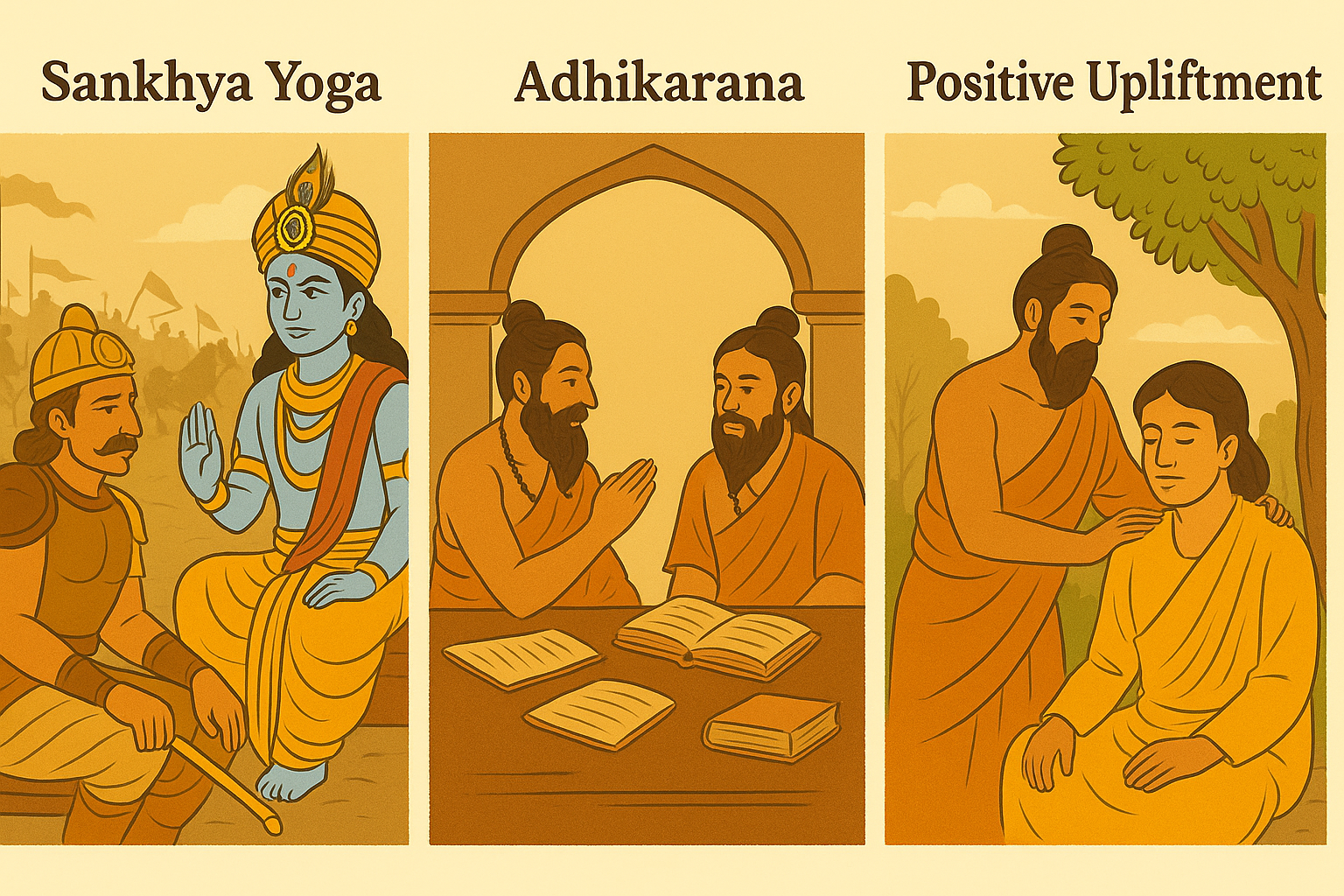
As we begin exploring the second chapter of the Bhagavadgītā — Sankhya Yoga — let us also reflect on the themes of Sankhya Yoga, Adhikaraṇa,and Positive Upliftment. Sankhya Yoga Yoga is often misunderstood today as merely a good morning routine.In …
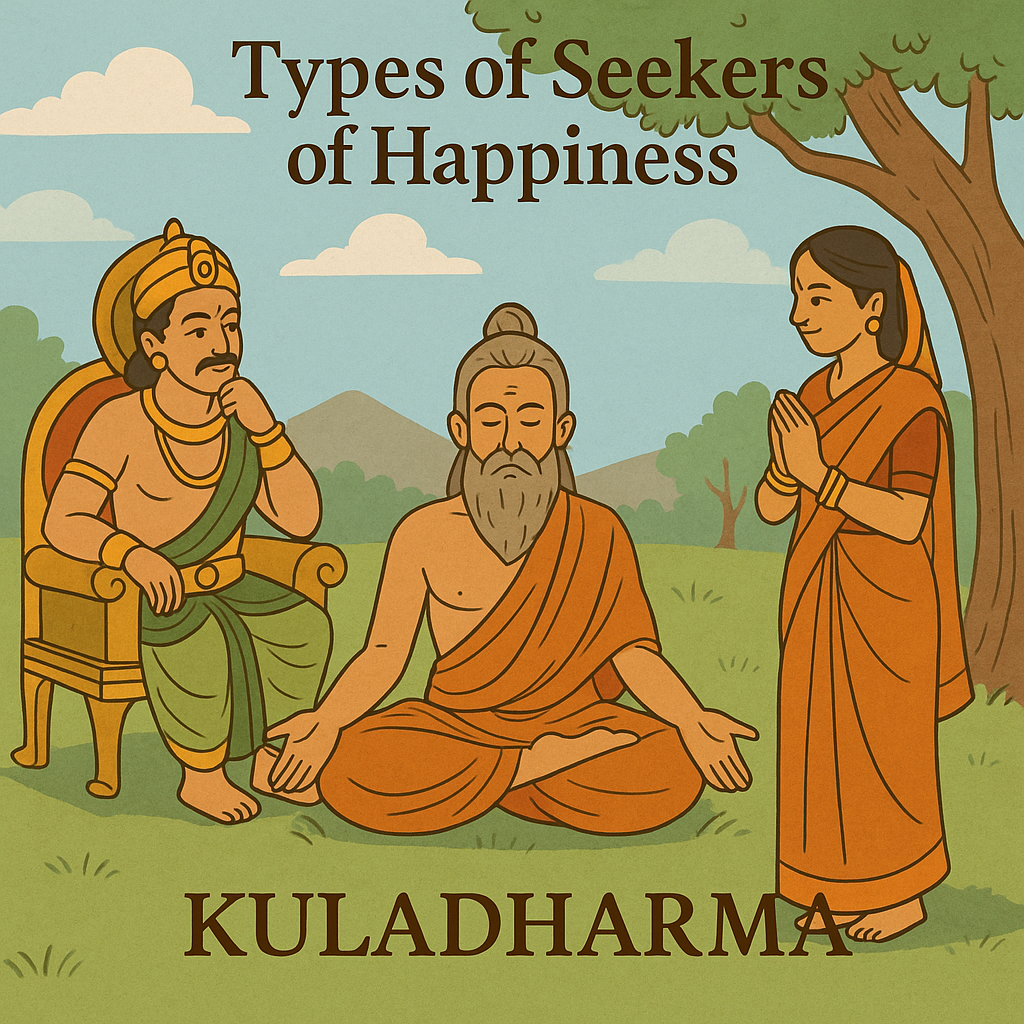
Through this episode-3, let’s explore the types of seekers of happiness along with the concept of Kuladharma. Types of Seekers of Happiness People usually experience happiness through personal achievements—such as success in education or career—and during festive occasions and family …
In our second episode,we saw Arjuna overcome by misplaced compassion upon seeing his own kinsmen on the battlefield.He was consumed by the thought of killing his relatives and destroying his own dynasty,which led him into a state of deep confusion. …
In our second episode,we try to understand the following: Para Vidya and Apara Vidya The word Vidya comes from the Sanskrit root “vid”,which means “to know” or “to understand.” The word Para refers to that which is transcendent,supreme or ultimate.Hence,Para …
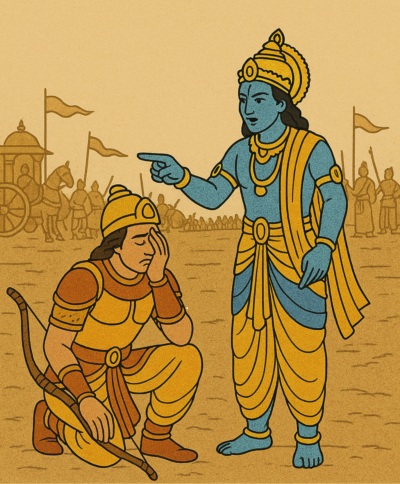
In the previous episode,upon Arjuna’s request,Bhagavān Śrī Kṛṣṇa drove the chariot to a position between the two armies—precisely where Arjuna could clearly see revered warriors such as Bhīṣma and Droṇa.There,He asked Arjuna to observe the Kaurava forces. When Arjuna asked …
The Gita Begins – – – – Let us now explore the Tattvopadeśa—the essential teachings—given by Bhagavān Śrī Kṛṣṇa to Arjuna,beginning with the …
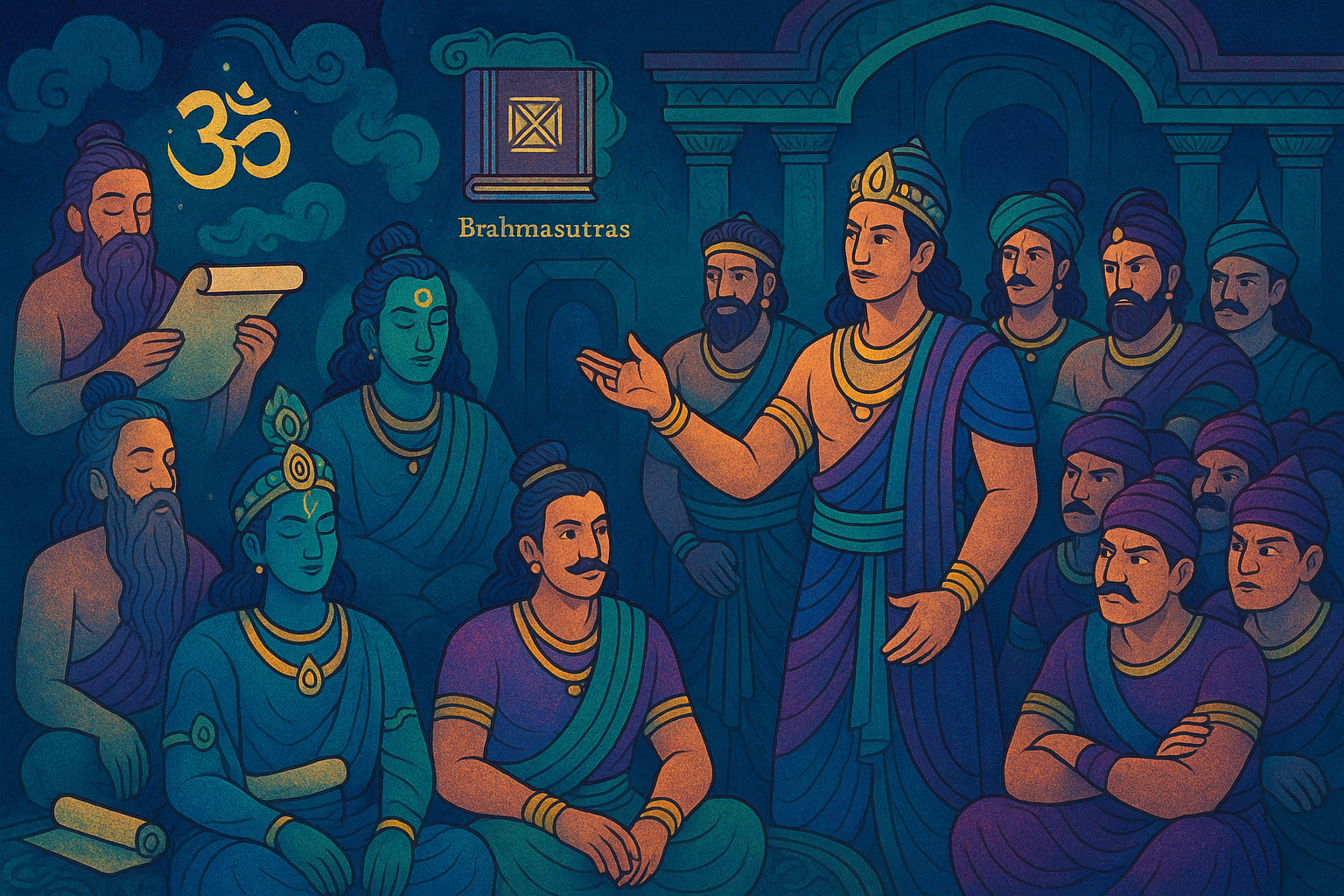
Prasthāna Trayam The essence of life lies in knowing that one truth—knowing which,everything else becomes known.It is the experience of the Supreme Self,the cause of all causes. The Vedas are the key to that knowledge,and the Upanishads—also known as Vedanta …